Everything You Need to Get a Birth Certificate
Advertiser disclosure



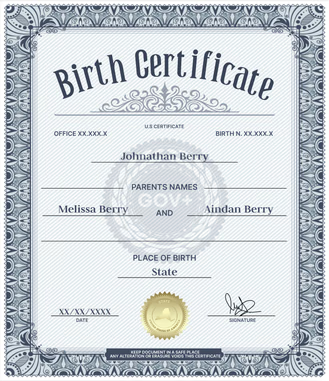
In the United States, a birth certificate is an essential identifying document. It certifies your date, time, and place of birth, as well as the names, ages, and birthplaces of your birth parents. Beyond providing a record of your birth and proving U.S. citizenship, a birth certificate is used to obtain other forms of identification, like a social security card or a driver’s license.
In certain instances, you’ll need a birth certificate to enroll in school, apply for government assistance, join the military, get a marriage license, secure insurance benefits, claim a pension, or get a passport.
Maybe your birth certificate was lost, stolen, damaged, or destroyed. Perhaps you never had one to begin with. Or maybe you need to obtain your child’s birth certificate or a birth record for another close relative. In any case, you’ve come to the right place.
Here, you’ll find guidance and assistance for obtaining a birth record. What do you need to get your birth certificate? Keep reading to find out.
Note: GOV+ is a private company and is not affiliated with any government agency.
What do I need to get a Birth Certificate?
In the United States, the federal government doesn’t issue birth certificates. They’re maintained and distributed by individual states and U.S. territories [1]. So, what do you need to get a birth certificate? The answer depends on the requirements set by the vital records office in the state or territory where you were born.
The Centers for Disease Control and Prevention (CDC), a federal agency, has a user-friendly directory with links for all the states and territories. When you navigate to your birthplace, you’ll find information about the cost and application process of requesting a birth certificate [2].
Each page links to the vital records office for that state or territory, which lists its own required information and necessary documents. This website also offers helpful guidance for getting a death certificate, marriage record, and divorce records [2].
Required information for getting a Birth Certificate
When you fill out the application form, you’ll need to provide information about yourself or the person on record (also known as the registrant).
To get a birth certificate, you should have the following information ready:
- Full name
- Sex
- Date of birth
- Birthplace, including the city, county, and hospital if applicable
- Parents’ full names, including mother’s maiden name
- Parents’ birthplaces
- Reason for request
- Social security number (if the state asks for it; Texas, for example, requires it for online orders) [4]
You’ll also need to provide up-to-date contact information such as a phone number and email address. Most importantly, you’ll submit a mailing address, which is where the birth certificate will be sent.
Reason for request
One critical piece of information you’ll need to provide when ordering a birth certificate is a reason for your request [1].
The reason for requesting a birth certificate could be to:
- Obtain or renew another form of identification such as a driver’s license or a social security card
- Enroll in school
- Prove employment authorization
- Secure insurance benefits
- Get a marriage license
- Provide documentation for court proceedings
- Enter the armed forces
- Get welfare assistance, veteran’s benefits, or other government benefits
- Replace a lost, stolen, or damaged birth certificate
- Get an additional copy or informational copy
- Obtain a delayed birth certificate
Some application forms may present various options, while others ask you to fill in the blank. Requesting a delayed birth certificate means it wasn’t filed within a year of the person’s birth. In that case, you’d be requesting the original document.
What identifying documents do you need to get a Birth Certificate?
When requesting an original or certified copy of a birth certificate, you’ll need to verify your identity. This might involve uploading a PDF copy or image file of your social security card, driver’s license, passport, or another government-issued photo ID.
If you don’t have this type of valid identification, you can usually provide two or three alternative identifying documents instead. Though approved documents vary, you might be able to use a work or school ID card, property records, or a bank statement. Some states may let a parent or other immediate family member with valid ID request the certificate for you.
Acceptable identifying for getting a birth certificate may include:
- Social security card
- Driver’s license
- State-issued photo ID
- Passport
- Work ID card
- School ID card
- Property records
- Bank statements
- Notarized letter from a birth parent
Some vital records offices have less stringent requirements. If you don’t have an acceptable ID, some states let an immediate family member who has sufficient ID order the birth certificate instead.
Does your Birth Certificate application need to be notarized?
In some states, such as California, application forms must be notarized. There, an authorized certified copy requires a sworn statement, signed under penalty of perjury, that has been notarized. An informational copy does not need one [5].
If the state you were born in requires notarization, you can often find a notary at a bank, law office, tax accounting firm, or shipping store. Call ahead to confirm. In addition to the birth certificate form, be sure to bring your ID with you to your notary appointment.
Cost of getting a Birth Certificate
The fees associated with getting a birth certificate vary from state to state. For example, Florida’s base state fee is $9, though online and county-office orders cost more [6]. California charges $31 for a certified copy [5], and the CDC directory lists $30 in New York State (outside New York City) [7].
After filling out the form and providing the necessary documents for an online order request, you can pay the certificate fee via credit card through a secure payment portal. If you’re mailing a request, you can usually pay the appropriate fee with a check or money order.
Requesting a Birth Certificate for someone else
As we mentioned, you can request a birth record for someone else, such as your child. If you recently had a baby, you’ll want to obtain an original birth certificate as soon as possible. The hospital usually initiates the process for children born in hospitals [3]. However, if your child was born at home or at a birthing center, you may need to apply on your own.
Generally speaking, you’re only able to order a birth certificate for a direct family member, but the definition of “direct family member” varies. Since the list of allowed relatives is different from state to state, it’s best to check with the vital records office to make sure you’re qualified to request the document.
You may be able to order a birth certificate if you are the registrant’s:
- Parent
- Legal guardian
- Stepparent
- Spouse
- Domestic partner
- Sibling
- Child
- Grandparent
- Grandchild
- Legal representative
When ordering a birth certificate for someone other than yourself, you’ll need to state your relationship with that person. Some states can issue heirloom birth certificates. These decorative certificates are mainly ordered for framing and display, and their legal status varies by state. Texas, for example, describes its heirloom certificate as a legal birth certificate [8].
If you’re not an immediate family member, you might need to provide additional verifying documents to legitimize your request and identify yourself as a qualified applicant. This could be a copy of your own birth certificate or Power of Attorney (PoA) documentation.
Birth Certificate request: Certified Copy vs. Original Copy
What’s the difference between a certified copy and an original copy of a birth certificate? An original birth certificate is created at the time of a person’s birth, typically within a hospital setting. It’s then filed with the state’s vital records office, certifying an official and legal record of birth.
A certified birth certificate copy, on the other hand, is made by the vital records office of an individual’s state of birth at some point after the original is created. Registrars emboss, stamp, or sign the document, confirming that it’s a true and correct copy of the original.
We’re here to make things easy
You can order a certified copy directly from the vital records office in your birth state, but each state sets its own forms, ID rules, and fees. If you’d rather not sort through your state’s rules, GOV+ prepares your request and tells you exactly what to send.
- One guided form — answer a few questions and we prepare your online application
- Upload your ID — a photo from your phone works.
- Receive your kit — your prepared application, a checklist of the ID and documents your state requires, and mailing instructions.
- Mail it to the state — the vital records office reviews your request, issues the certified copy, and mails it to you.
And applying for a birth certificate through GOV+ sets you up for every government application you may need from now on. Our autofill technology stores your information and automatically pre-fills future forms, so you never have to start from scratch again.
Apply for a birth certificate today.
References
- USAGov, “How to replace vital records”: https://www.usa.gov/replace-vital-documents
- Centers for Disease Control and Prevention (CDC), National Center for Health Statistics, “Where to Write for Vital Records”: https://www.cdc.gov/nchs/w2w/index.htm
- CDC, National Center for Health Statistics, hospital guide for completing birth certificate facility worksheets: https://www.cdc.gov/nchs/data/misc/hb_birth.pdf
- Texas Department of State Health Services, “Requirements for Online Orders”: https://dshs.texas.gov/vital-statistics/check-order-status/requirements-online-orders
- California Department of Public Health, Vital Records, “Application for Certified Copy of Birth Record” (Form VS 111): https://www.cdph.ca.gov/Programs/CHSI/CDPH%20Document%20Library/VS111.pdf
- Florida Department of Health, Bureau of Vital Statistics, “Birth Certificates”: https://www.floridahealth.gov/certificates-records/birth-certificates/
- CDC, National Center for Health Statistics, “Where to Write for Vital Records: New York (Except New York City)”: https://www.cdc.gov/nchs/w2w/new_york.htm
- Texas Department of State Health Services, “Heirloom Birth Certificates”: https://www.dshs.texas.gov/vs/birth/heirloom.aspx