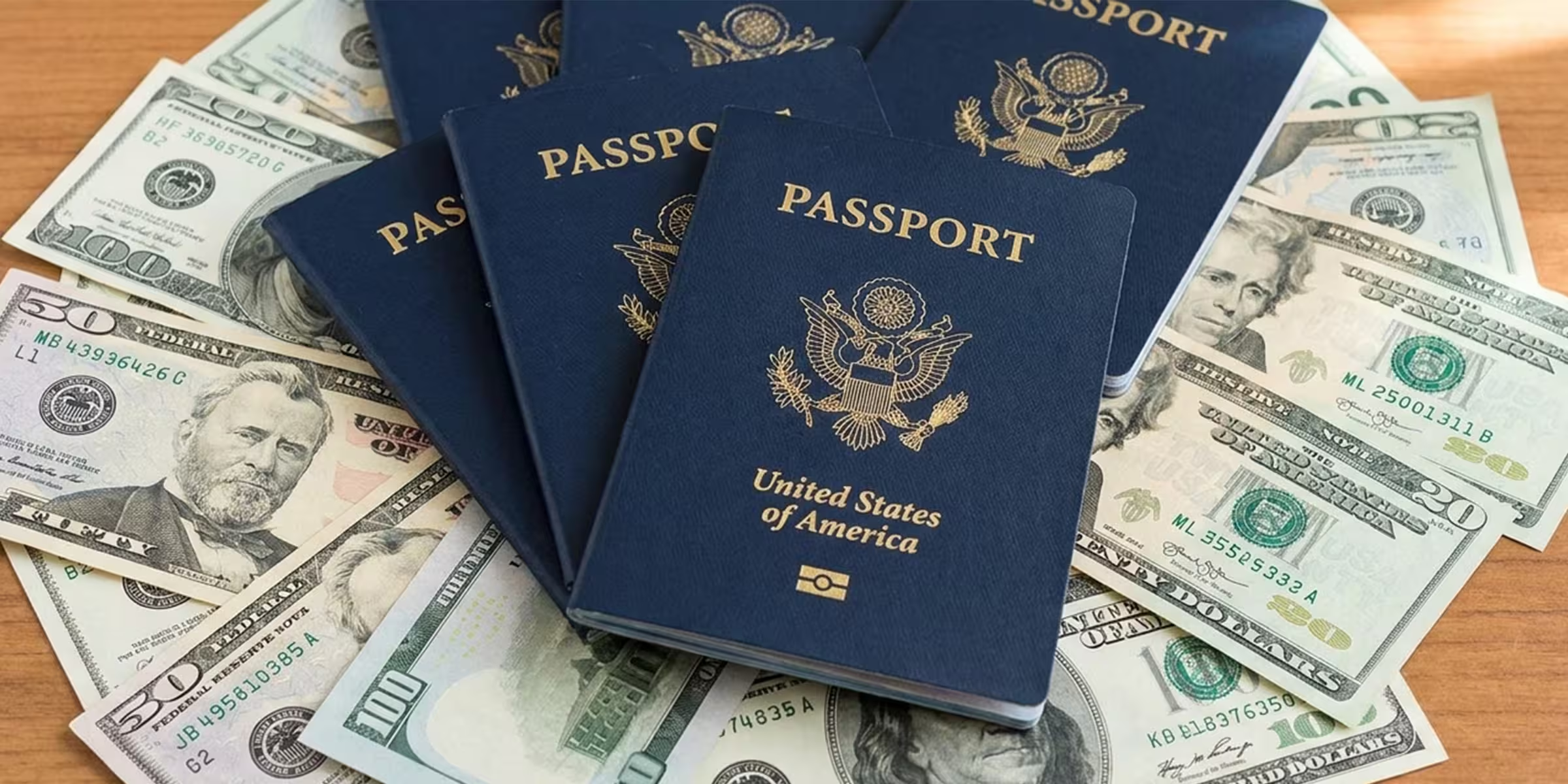
How do I change my name on my passport?
Advertiser disclosure



If you’ve recently changed your name due to marriage, divorce, or any other reason, you’ll need to ensure that your fresh legal moniker adorns your US passport.
Even if you’re not planning on traveling abroad soon, you can use your passport to affirm your identity for a credit check or prove your United States citizenship when you accept a new job offer, so maintaining an up-to-date passport with your correct legal name is integral to the name change process.
In this article, we’ll teach you how to change your name on passport documents while remaining in legal compliance with your local jurisdiction during the process. Although the name change process can take some time, using your up-to-date name while traveling, providing information for a credit check, or applying for a new job is incredibly gratifying. Let’s take a look at the travel document steps below.
Note: GOV+ is a private company not affiliated with a government agency; however, GOV+ offers passport courier services as a registered U.S. passport courier with the U.S. Department of State. (Registered name, Premier Passports LLC)
#1 Complete your jurisdiction’s requirements
Before you submit your name change documents to the U.S. Department of State to receive a new passport, you must first complete the legal name change process for your local jurisdiction.
Name changes are most frequently completed at the county court level. However, there are three common name change scenarios, and each scenario has its own requirements for completion and legal recording of a new name:
- Name Change After Marriage – After you marry your spouse, an original or certified copy of your marriage certificate can serve as proof of your new middle or last name (or both); the U.S. Department of State lists it as an accepted name change document [1].
- Name Change After Divorce – While most divorce court proceedings typically include a name change procedure, recent divorcees will need to update their name with any relevant agencies, including the U.S. Department of State for their passport (see the forms in step 2) [1][2].
- Name Change by Choice – If you choose to change your first and last name outside of a marriage or divorce procedure, you must complete your jurisdiction’s requirements to obtain a Final Judgement of Change of Name Form. These steps usually include:
- In some states, such as Florida, undergoing fingerprinting for a state and national criminal background check before your court hearing [3].
- Completing the appropriate forms and filing a Petition for Change of Name with your local court system.
- Attending at least one uncontested court hearing to confirm your change of name with a county judge and achieve a Final Judgement for Change of Name.
Name change procedures and costs differ by state, so review your jurisdiction’s requirements before you apply to update your passport [2]. Court filing fees vary by state and county. In California, for example, the filing fee for a name change is $435 to $450, and you can ask the court to waive it if you can’t afford it [4]. Some states charge additional costs, such as California’s requirement to publish your request in a newspaper, which carries its own fee [4].
#2 Send in the appropriate forms
Once you complete the name change procedure with your local jurisdiction, you’ll need to submit the appropriate forms to the U.S. Department of State, either by mail or in person at a passport acceptance facility, depending on your situation. However, the process for requesting a name change on your current passport isn’t one-size-fits-all. There are a variety of circumstances and corresponding forms to consider before submitting, each with a different cost [1][5]:
- Travelers whose passport was issued less than one year ago, and who legally changed their name within that year, submit form DS-5504 by mail. With this form, travelers do not have to pay a passport fee to change their current passport unless they request expedited service, which costs $60.
- Travelers whose passport was issued, or whose name was legally changed, more than one year ago file form DS-82 by mail if they are eligible to renew, with a certified copy of their name change document, and pay a passport book fee of $130. Travelers who are not eligible to renew by mail apply in person with Form DS-11.
- Travelers who have no legal record of their name change submit form DS-11 along with a payment of $130 for the passport book and $35 for the facility acceptance fee. They must apply in person and also submit Form DS-60, Affidavit Regarding a Change of Name, completed by 2 people who have known them by both names, plus 3 certified or original public records showing they have used the new name for 5 years or more.
For each circumstance, travelers seeking to change their name on their passport must submit supporting documents, this is similar to how to get a second passport. These documents typically include a Final Judgement of Change of Name from your jurisdiction’s court, proof of identity (such as a state ID or voter registration), or proof that your new name has been in use for a specific period of time.
In most cases, travelers must mail the appropriate documents to a national passport office instead of making an appointment with a local location that processes passport applications. Your name change circumstances will determine the necessity of mailing vs. making an in-person appointment.
#3 Confirm your name change with other institutions
Your passport isn’t the only record that needs your new name. After a legal name change, update your other identification documents as well, so your records match when you travel, open accounts, or fill out official paperwork.
It’s often easiest to start with your core records:
- Your Social Security record (and card)
- Your state ID card or driver’s license
- Your voter registration
Next, apply to update your passport. What you’ll need depends on how you apply:
- By mail (Form DS-5504 or DS-82). You don’t need to submit another form of ID. Instead, send your most recent passport, a passport photo, and an original or certified copy of your legal name-change document, such as a marriage certificate, divorce decree, or court order [1].
- In person (Form DS-11). Bring a valid primary photo ID, ideally issued in your new name, such as a driver’s license. Social Security and voter registration cards count only as secondary ID, so they can’t replace a primary photo ID [6].
Once you apply for your updated U.S. passport, let these institutions know about your new name:
- Bank
- Credit card company
- College or university
- Insurance company
- Medical provider
Changing your legal name takes several steps, but updating all of your records before your next trip abroad helps you avoid mismatched documents along the way.
How GOV+ can help you
After a legal name change, each agency needs its own form: SSA for your Social Security card, the State Department for your passport, the IRS, and more. If you’d rather not enter the same details on every one, GOV+ prepares them all from a single set of answers.
- GOV+ fills in the forms for SSA, your passport, the IRS, and more with your new name. You review, sign, and send.
- Your kit arrives sorted by agency. Each form comes with its own prepaid, pre-addressed envelope and step-by-step instructions.
- You enter your information once, and it carries over to every form in your kit, so you don't start from scratch every time.
Some of the additional benefits that come with a GOV+ subscription:
- Digital vault: upload your documents once and GOV+ pre-fills every future form automatically.
- Document shield: if your documents are lost, stolen, or damaged, replacement kits are ready when you need them.
- Identity protection: GOV+ monitors for fraud and alerts you instantly.
Ready to get started? Start your name-change application with GOV+.
References
- U.S. Department of State. Change or Correct a Passport.
- USA.gov. How to Change Your Name and What Government Agencies to Notify.
- The Florida Senate. Florida Statutes § 68.07, Change of Name.
- California Courts Self-Help Guide. File Your Name Change Petition.
- U.S. Department of State. Passport Fees.
- U.S. Department of State. Photo ID Requirements.