Out-of-State Birth Certificate Service for Military Families and Relocations
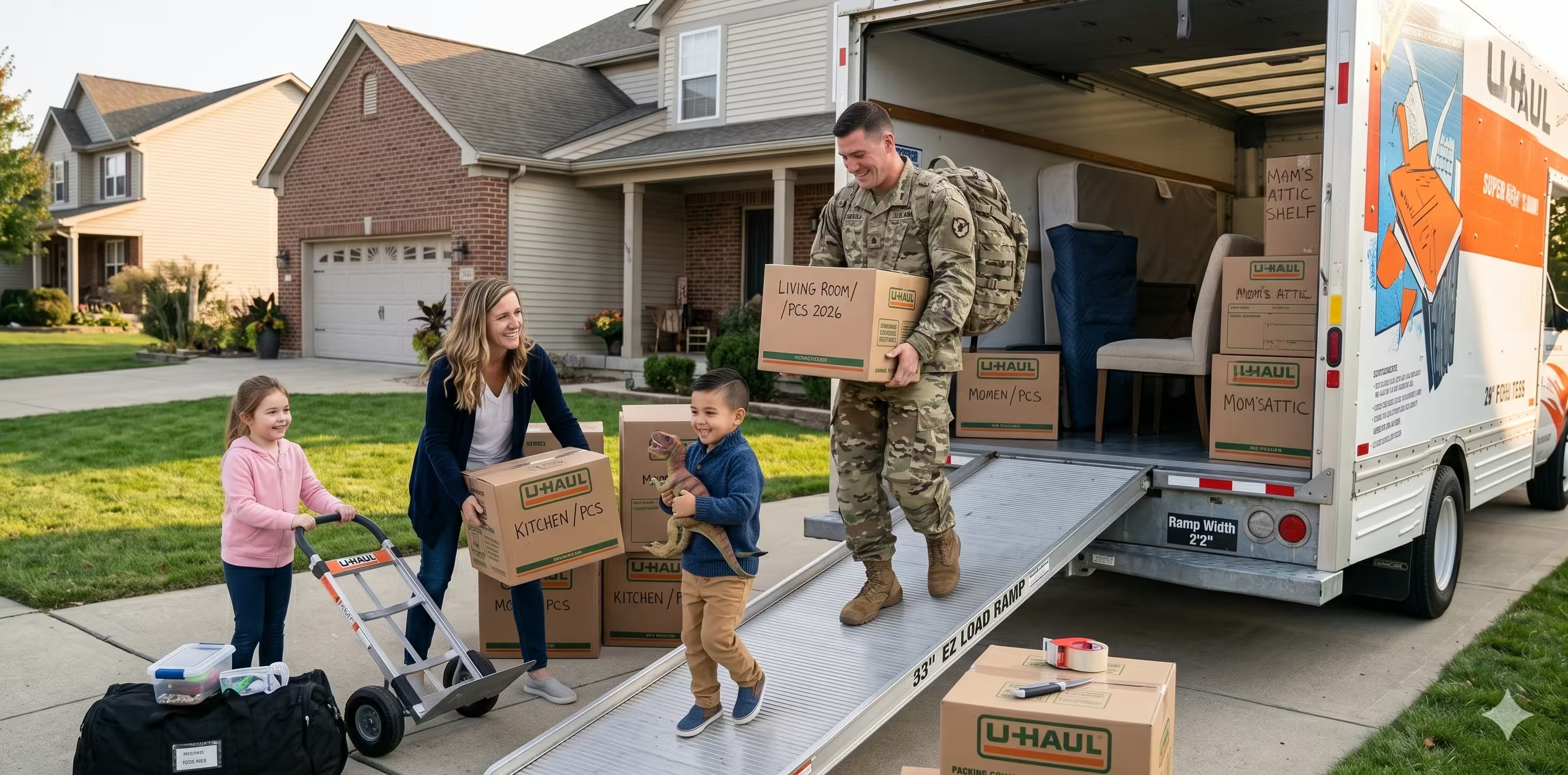



When you relocate to a new state, your birth certificate does not move with you. It stays with the vital records office in the state where you were born. If you were born in Georgia and are now stationed at Fort Wainwright in Alaska, your application goes to Georgia, not Alaska.
This matters more for military families than almost any other group. A PCS move triggers a cascade of document needs: a new state driver's license, REAL ID compliance, DEERS enrollment for a new spouse or dependent, school registration for kids, and sometimes a passport renewal before overseas orders begin. Every one of those tasks may require a certified birth certificate from a state you haven't lived in for years. GOV+ handles those requests 100% online. No travel to your birth state, no in-person appointments, with delivery to whatever address you're at now.
Why Out-of-State Birth Certificate Requests Are Different
Most people can walk into their state's vital records office if they need a birth certificate. When you live in a different state than where you were born, that option is off the table. You're dealing with another state's rules, another state's forms, and another state's processing timeline, all from a different location.
The complications pile up quickly. Some states accept online requests; others require mail-in applications with notarized identity documents. The acceptable ID list varies. The fee varies. The processing time varies. And if you're managing a PCS move while handling housing, school enrollment, and your own job transition, tracking down the right vital records office for a state you left a decade ago is one task too many.
GOV+ pre-loads the requirements for your birth state and routes your application correctly, so you are not navigating a government website from a state you no longer live in, from a new address you just moved into.
When Military Families Need a Birth Certificate
Understanding the specific situations where a certified birth certificate becomes necessary after a move helps you plan ahead rather than scramble.
Driver's License or REAL ID in a New State
Most states require a certified birth certificate as proof of identity and citizenship when you apply for a driver's license or REAL ID for the first time in that state. A military ID or CAC satisfies the federal REAL ID requirement for flying and accessing federal facilities. If a military spouse or dependent needs a state-issued REAL ID, the DMV typically requires a certified birth certificate from the birth state.
DEERS Enrollment for New Dependents
Enrolling a spouse or new dependent in DEERS requires a birth certificate. Military spouses need theirs when registering for benefits. Children's birth certificates are required to add them as dependents and to issue dependent ID cards. If those documents aren't immediately on hand after a move or a new addition to the family, the enrollment process stalls.
School Enrollment at a New Installation
Most school districts require a certified birth certificate for enrollment. Families arriving at a new installation mid-year often face a registration deadline before their household goods arrive. Having a way to request a replacement online and have it delivered to the new address closes that gap.
Passport or Passport Renewal
Service members deploying overseas and family members planning to follow may need passport renewals. A first-time adult passport application requires a certified birth certificate. If yours is lost, damaged, or held in a state thousands of miles away, you need a replacement before the passport process can start.
How GOV+ Handles Out-of-State Birth Certificate Requests
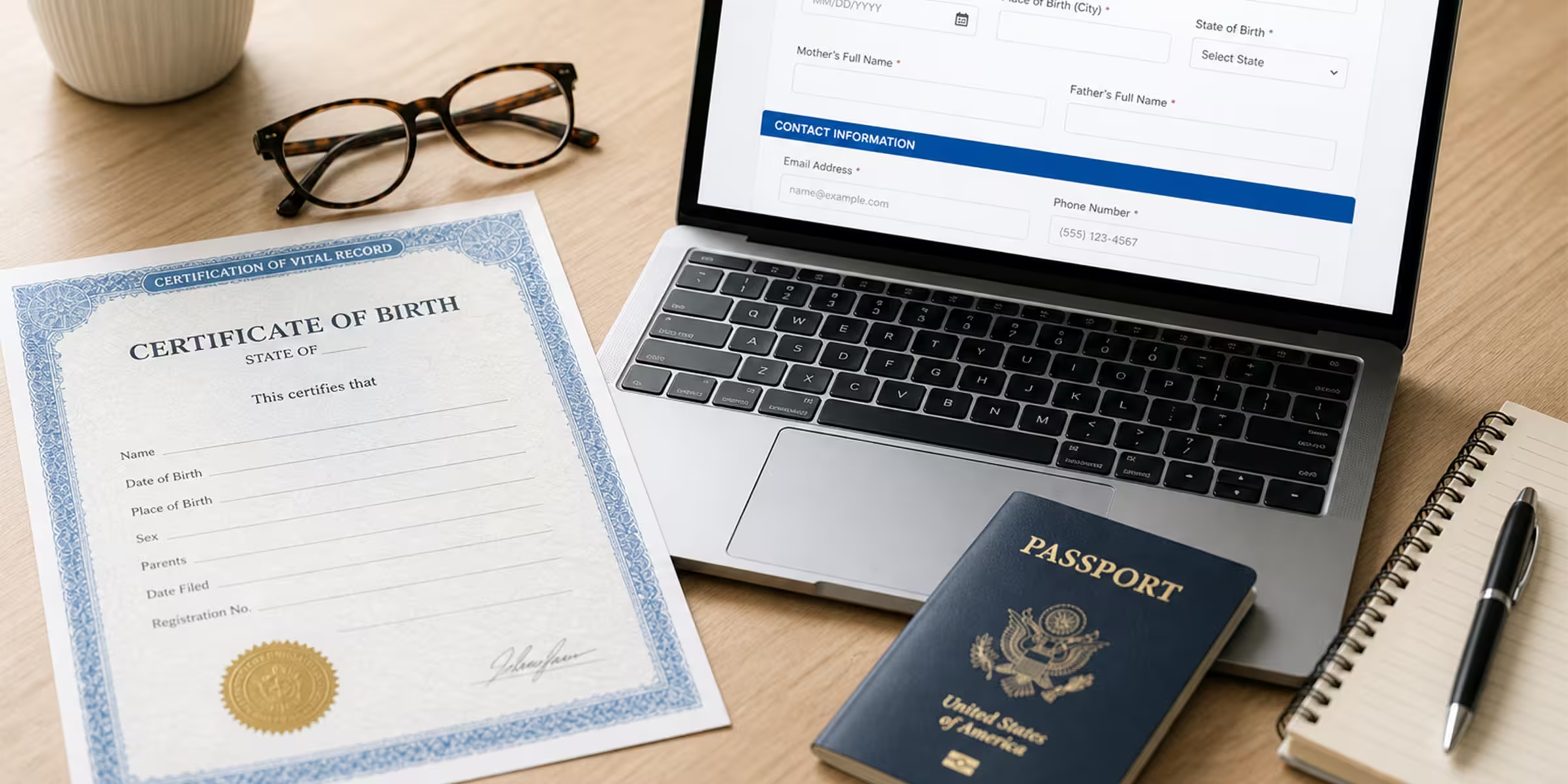
GOV+ is a private online service, not a government agency. It prepares your birth certificate application kit correctly for your birth state: filling in the state-specific forms, formatting your ID to meet that state's requirements, handling online notarization if needed, and confirming your application goes to the right vital records office.
Here’s the process:
- Fill out a simple online form. Takes about five minutes. No government websites to navigate.
- Take a picture of your ID. A phone photo is all you need. GOV+ formats it to meet your birth state's ID standards.
- Receive your pre-filled application materials. Error-checked by our team, with online notarization included if your state requires it.
- Get your certified birth certificate in the mail. Delivered to any address: your new duty station, your base housing, wherever you are now.
Military ID cards are accepted as proof of identity in most states. You may not need to produce a driver's license from your birth state or any document that ties you back to where you used to live.
The service is currently available to adults (18 and older). Government fees vary by state. Average processing time is around six weeks from submission.
Apply for your birth certificate today.
The GOV+ Autofill Advantage for Military Families
Military families often need to complete multiple government applications around the same time as a PCS move. GOV+ carries your information forward automatically. The details you enter for a birth certificate application pre-fill your other GOV+ applications: passport, TSA PreCheck, Social Security card, address change, taxes, and EIN. You don't start from scratch each time.
For a family managing document renewals across multiple people at the same time, this matters. A spouse's birth certificate, a child's birth certificate, a passport renewal, a DEERS update: all of these draw on the same personal and family information. GOV+ stores it once and applies it across every application.
For more on how the process works across all 50 states, the GOV+ birth certificate guide covers requirements and timelines by state. And if your situation is time-sensitive, the fastest ways to order a certified birth certificate breaks down how to avoid the delays that add weeks.
Whether you're dealing with one document or several, GOV+ makes the birth certificate process easy:
- Simple online form with no paper forms and no government websites to navigate
- ID photo taken with your phone and formatted to meet your birth state's requirements
- Online notarization included when required
- Expert review to catch errors before your application reaches the vital records office
- Real-time tracking so you can monitor your application at every step
- 24/7 expert support by phone, chat, and email
PCS orders don't wait for paperwork to catch up. If a document need is going to come up at the next assignment, it's worth handling before the move rather than during one. Start your birth certificate application now, and have it delivered to wherever you're headed.
Apply for your birth certificate today.
Frequently Asked Questions
Can I get a birth certificate from a state I no longer live in?
Yes. Your application goes to the vital records office in the state where you were born, regardless of where you currently live. GOV+ routes your application to the correct state office and handles that state's specific requirements for you.
Does a military ID work as proof of identity for a birth certificate request?
In most cases, yes. Military ID cards are widely accepted as valid government-issued photo ID for birth certificate requests, though requirements can vary by state. GOV+ formats your ID documentation to meet your specific birth state's requirements.
Do I need to go back to my birth state to request my birth certificate?
No. Most states accept mail-in or online requests from applicants living elsewhere. GOV+ handles the application entirely online, with delivery to any address in the United States.
How long does it take to get an out-of-state birth certificate?
Processing time is set by the birth state's vital records office, not by where you currently live. Average processing runs around six weeks, though some states are faster and others slower. GOV+ provides real-time tracking throughout the process.
Can I apply for birth certificates for multiple family members at once?
Each family member requires a separate application, since each certificate is held by the vital records office of the state where that person was born. GOV+'s autofill technology carries shared family information across applications, so each additional application starts with your household details already filled in.
References
- USAGov. "How to get a certified copy of a U.S. birth certificate." https://www.usa.gov/birth-certificate
- Military OneSource. "Military ID and CAC Cards for the Military Community." https://www.militaryonesource.mil/military-basics/new-to-the-military/military-id-and-cac-cards-for-military-community/
- GOV+. "Replacement Birth Certificate for Passport Renewal: Fastest Ordering Options." https://govplus.com/resources/replacement-birth-certificate-for-passport-renewal-fastest-ordering-options
- GOV+. "Best Birth Certificate Online Application and Replacement Service in the US." https://govplus.com/resources/birth-certificate-online-application-replacement-service-in-us
- Pennsylvania DMV. "REAL ID FAQs." https://www.pa.gov/agencies/dmv/faqs/driver-licensing-faqs/real-id-faqs