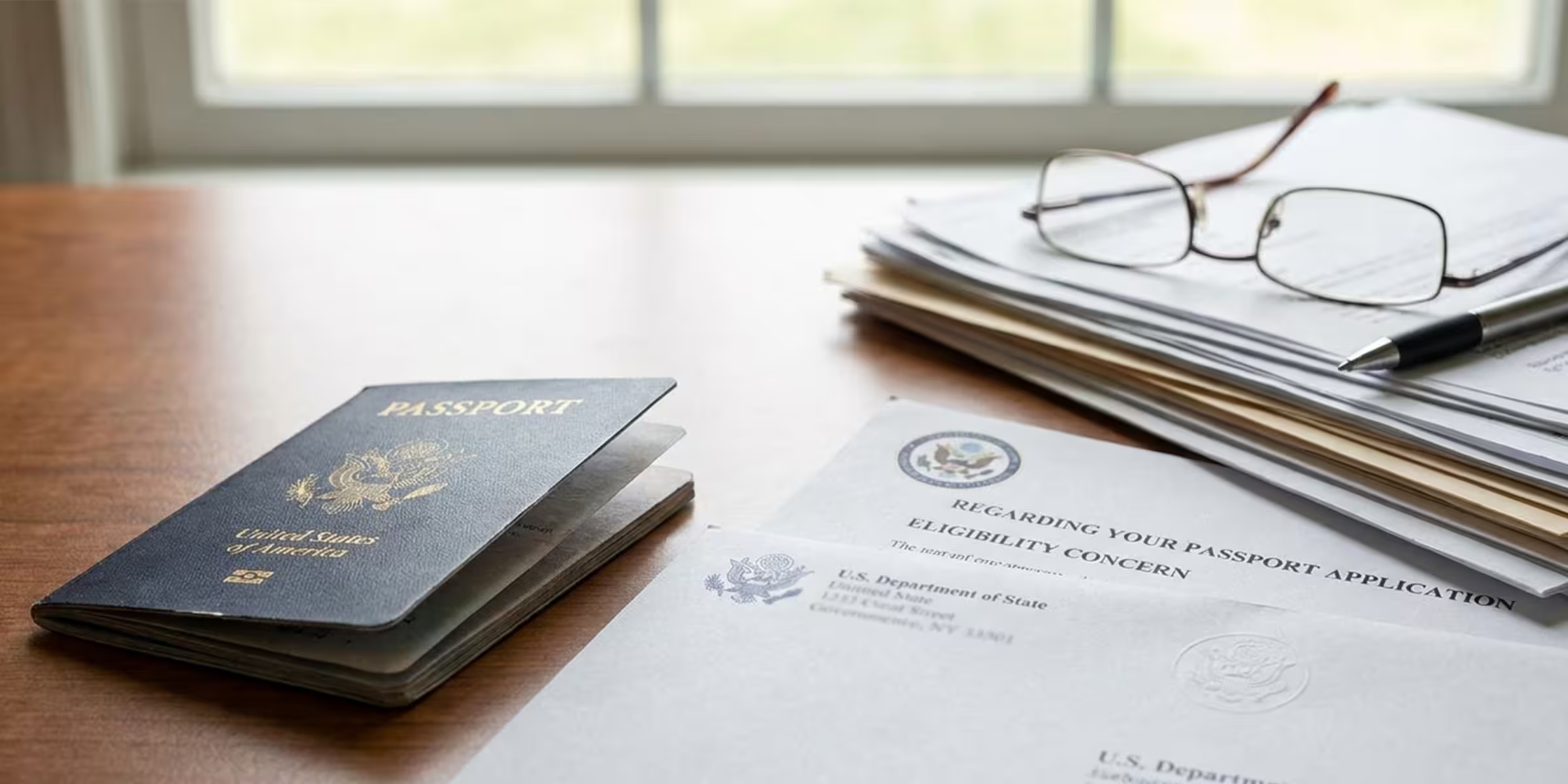



A suspended U.S. passport means the State Department has denied your application, revoked a passport already in your possession, or placed a restriction on your travel – and clearing it requires contacting the right agency before the State Department can do anything at all.
The State Department does not initiate these actions on its own. It acts on certifications submitted by one of three authorities: the Office of Child Support Services (OCSS) for past-due child support of $2,500 or more, the Internal Revenue Service for seriously delinquent federal tax debt, or a court or law enforcement authority for active warrants and travel restrictions. Whichever authority certified your case is the one you must resolve with first.
This article explains what each of those three certification tracks means for your passport, what the resolution steps look like for each, how long the full process typically takes, and where a passport preparation service like GovPlus can help once the underlying obligation is cleared.
A federal passport suspension or revocation is a formal enforcement action, not a processing delay or documentation hold. The State Department does not originate these actions on its own. It responds after receiving a certification or referral from an outside authority: the state child support enforcement agency (which reports through the federal Office of Child Support Enforcement, OCSE, within HHS) for past-due child support; the Internal Revenue Service under IRC Section 7345 for seriously delinquent tax debt; or a court or law enforcement authority for active warrants or court-ordered travel restrictions.
The practical effect depends on where you are in the passport process. If you have an open application or renewal pending, the State Department may deny it. If you already hold a valid passport, it may be revoked and rendered invalid for international travel. In either case, you cannot use or obtain a valid U.S. passport until the certifying authority reverses or clears its certification and the State Department receives notice of that clearance.
You will typically receive written notice from the State Department or the certifying authority identifying the reason and the agency responsible. That letter is your starting point: it tells you which authority you need to contact first and what you need to resolve before the State Department can act.
If your passport was revoked, reapplying is not as simple as submitting a renewal. The State Department's current guidance for revoked passports requires a new DS-11 application submitted in person, but the specific requirements for your situation should be confirmed directly with the State Department or a qualified attorney before you file.
Three federal certification tracks account for nearly all passport suspensions. Each is triggered by a different certifying authority, and each carries a different resolution path. The track that applies to your case determines who you contact first and how long the process takes.
Suspension Reason at a Glance
The federal child support threshold for passport suspension is $2,500 in past-due child support. When a parent's balance reaches that level, the state child support enforcement agency submits the case into the federal passport denial program administered by the Office of Child Support Enforcement (OCSE), part of the U.S. Department of Health and Human Services. The federal OCSE then transmits the certification to the State Department under 42 U.S.C. 652(k). The State Department responds by denying a new application or revoking an existing passport.
The most important procedural detail is where you start: your state child support enforcement agency, not the State Department and not the federal OCSE office. The State Department cannot act on your case until the state agency updates or removes your case from the federal passport denial program, and that update reaches the State Department through the federal OCSE process. Contacting the State Department first does not accelerate anything; it cannot move until it receives that federal update.
Resolution options include paying the arrears below the $2,500 threshold, establishing a payment plan that the state child support enforcement agency formally approves, or otherwise satisfying the certification requirements. Once you act, the sequence that follows is not immediate: the state agency must update or remove the case from the federal program, OCSE processes that change, and the State Department receives the update through the federal process before it can proceed. Each step in that chain takes time, and the total wait extends beyond whatever the State Department's own processing window shows.
Set this expectation before you start: the reporting lag between when you resolve the underlying obligation and when the State Department can act is real and variable. Once the certification clears and the State Department receives confirmation, you can renew your passport or apply for a new one through the standard process.
The IRS certifies taxpayers with seriously delinquent tax debt to the State Department under IRC Section 7345, enacted as part of the Fixing America's Surface Transportation Act (the FAST Act). For 2026, the threshold is more than $64,000 in combined federal tax, penalties, and interest, adjusted annually for inflation from the original $60,000 statutory amount. Once certified, the State Department may deny a new application, deny a renewal, or revoke an existing passport.
Resolution options include full payment of the outstanding balance, an IRS-approved installment agreement, an accepted offer in compromise, or a currently-not-collectible status determination. Once the underlying debt is resolved or a certification error is corrected, the IRS is required to reverse the certification within 30 days and notify the State Department as soon as practicable. That 30-day reversal period begins when the debt is actually resolved or the error corrected — not when a payment is initiated or an agreement is first proposed.
The IRS generally does not certify, or will reverse an existing certification, for taxpayers in certain protected categories: those in active bankruptcy proceedings, those with an approved installment agreement or accepted offer in compromise who are current on its terms, those with a pending innocent spouse relief claim, and those receiving relief under a federally declared disaster. If you believe you fall into one of these categories and have already been certified, contact the IRS to have your status reviewed.
If you have upcoming international travel and your passport has been denied or revoked due to tax debt, the IRS has procedures that may allow for expedited review or decertification in cases involving imminent travel. This is not a guaranteed outcome, but it is worth raising directly with the IRS given the time-sensitive nature of your situation. For broader guidance on urgent passport needs once a certification is cleared, how to get a passport fast covers the State Department's expedited options available at that stage.
The State Department may deny or revoke a passport when a court or law enforcement authority submits a qualifying request under applicable federal regulations. The triggering circumstances are more specific than a general warrant or restriction. On the warrant side, a valid, unsealed federal warrant of arrest is the primary basis; certain state and local warrants may also qualify under 22 C.F.R. Part 51. On the court-order side, conditions of probation or parole that explicitly prohibit international travel, or court-imposed travel restrictions tied to an active criminal matter, are the categories most likely to affect passport eligibility. A sex offender monitoring requirement does not operate as a standalone passport trigger; it affects passport access when it is embedded in a probation, parole, or court order that restricts travel.
The State Department does not automatically deny or revoke a passport upon every request from a law enforcement or court authority. The request must fall within the specific legal categories recognized under federal passport regulations. That said, when a qualifying request is received, the State Department will act on it — typically by denying a pending application or revoking an existing passport.
Resolution in this track goes through the court or law enforcement authority that submitted the request, not through the passport office. The State Department cannot issue or reinstate a passport until the underlying legal hold is lifted, modified, or satisfied by the issuing authority. The appropriate first contact is the court that imposed the restriction or an attorney familiar with the case — not the State Department.
This track is often the least predictable of the three in terms of timeline, because the resolution depends on court proceedings, the status of any underlying warrant, or the procedural steps required to modify or lift the restriction. The process is legally clear even when the duration is not: the court or law enforcement authority must act first, and the State Department follows.
Regardless of which certification track applies to your case, the sequence is the same: the certifying authority must act first, and the State Department follows. Contacting the State Department before the certifying authority has cleared or reversed the underlying certification will not speed up the process. Even after the certifying authority acts, there may be a notification lag before the State Department receives and processes the update — so the State Department's processing clock does not start the moment you resolve the underlying obligation.
Here is the step-by-step path:
Clearing a passport action runs through two required phases. The first is the certifying authority's resolution and reporting process. The second is the State Department's own processing after it receives confirmation that the hold has been cleared. Both phases are required, and the State Department cannot begin its phase until it receives notice that the underlying certification has been lifted. In some cases, administrative steps in both phases may run closer together, but there is no shortcut that allows the State Department to move ahead before that notice arrives.
Phase one: certifying authority resolution and reporting
Phase two: State Department processing after the hold clears
Neither window is guaranteed, and the State Department's stated times are subject to change. For travelers with imminent international travel, the IRS offers procedures that may allow for expedited review in tax debt cases, and U.S. embassies or consulates can provide assistance for travelers who are already abroad.
GovPlus enters the process after the certifying authority has lifted the hold — not before. Once your child support balance, tax debt, or court restriction is resolved and the State Department has received notice, the next step is submitting a complete, accurate application. That is where GOV+ helps.
For most people coming out of a passport denial or revocation, the required form is DS-11, filed in person at a passport acceptance facility. An incomplete or incorrect DS-11 means a rejected application and additional weeks of delay — exactly what you cannot afford at this stage.
Here is what GOV+ prepares for your DS-11 appointment:
GOV+ subscription benefits that apply once your passport is restored:
Apply for a passport with GOV+
It depends on the specific action the State Department took. If a passport that had already been issued was revoked, it is no longer valid and cannot be reinstated. The State Department's current guidance requires a new DS-11 application submitted in person at a passport acceptance facility. If your renewal application was denied before any passport was issued, the reapplication pathway depends on whether you were renewing an existing passport or applying for the first time — the form and requirements may differ, and confirming the correct pathway with the State Department before you file is the safest approach. In either case, your notification letter will state whether the action was a revocation of an existing passport or a denial of a pending application. GOV+ passport preparation service can help you file the correct application accurately once the certifying authority has cleared the underlying hold.
Your notification letter from the State Department will typically identify the reason for the denial or revocation. If it references unpaid child support, your starting point is your state child support enforcement agency — not the federal OCSE office or the State Department directly. If it references seriously delinquent tax debt, contact the IRS. If it references a court order, warrant, or travel restriction, contact the issuing court or consult an attorney. If the letter does not clearly identify the certifying authority, the State Department's National Passport Information Center can confirm which authority is on file for your case.
No. Paying the balance resolves the underlying obligation, but it does not instantly update the State Department's records. After you pay or establish an approved plan, your state child support enforcement agency must update or remove your case from the federal passport denial program administered by OCSE. That change then reaches the State Department through the federal process. The timeline for that reporting chain varies by state and cannot be guaranteed. Follow up with your state agency to confirm when the update has been transmitted, and do not make firm travel commitments until you have verified that the State Department's records reflect the clearance.
A federal certification applies to passport issuance generally, covering both the passport book and the passport card. Both are U.S. travel documents issued by the State Department, and a certification from OCSE/HHS, the IRS, or a court or law enforcement authority affects your ability to obtain or hold either document. If your book was revoked, your card is subject to the same enforcement action. If you held only one document type when the action was taken, you would not be able to apply for the other while the certification remains active.
Emergency passports are issued for genuine life-or-death situations, such as a critical illness or the death of a family member abroad. A federal certification does not automatically disqualify you from emergency consideration, but the underlying hold remains active. As part of emergency processing, the State Department will contact the certifying authority. If that authority does not lift the hold, the State Department cannot issue the passport. If you have a genuine emergency and an active certification against your passport, contact the State Department directly to explain the circumstances. Emergency appointments are handled at U.S. passport agencies.


1,500,000+







© 2026 EIN Plus LLC DBA GovPlus. All rights reserved. GovPlus® is a registered trademark of EIN Plus LLC.
GovPlus® is a private online software technology company not affiliated nor endorsed by any Government or State agency. GovPlus® is authorized by the U.S. Department of State, through its subsidiary Premier Passports LLC as a registered passport courier, by the Internal Revenue Service (IRS) as an authorized e-file provider, by the Financial Crimes Enforcement Network (FinCEN) as a Beneficial Ownership Information (BOI) provider. We do not charge for any forms; however, we charge for the use of our software to assist you in completing forms. GovPlus® is not a federal or state agency, financial institution, accounting firm, or law firm, and we do not provide legal or financial advice. GovPlus® does not issue any government documents. You can apply directly for government services at their official websites at no cost beyond government fees.
Terms and conditions, features, support, pricing, and service options subject to change without notice.