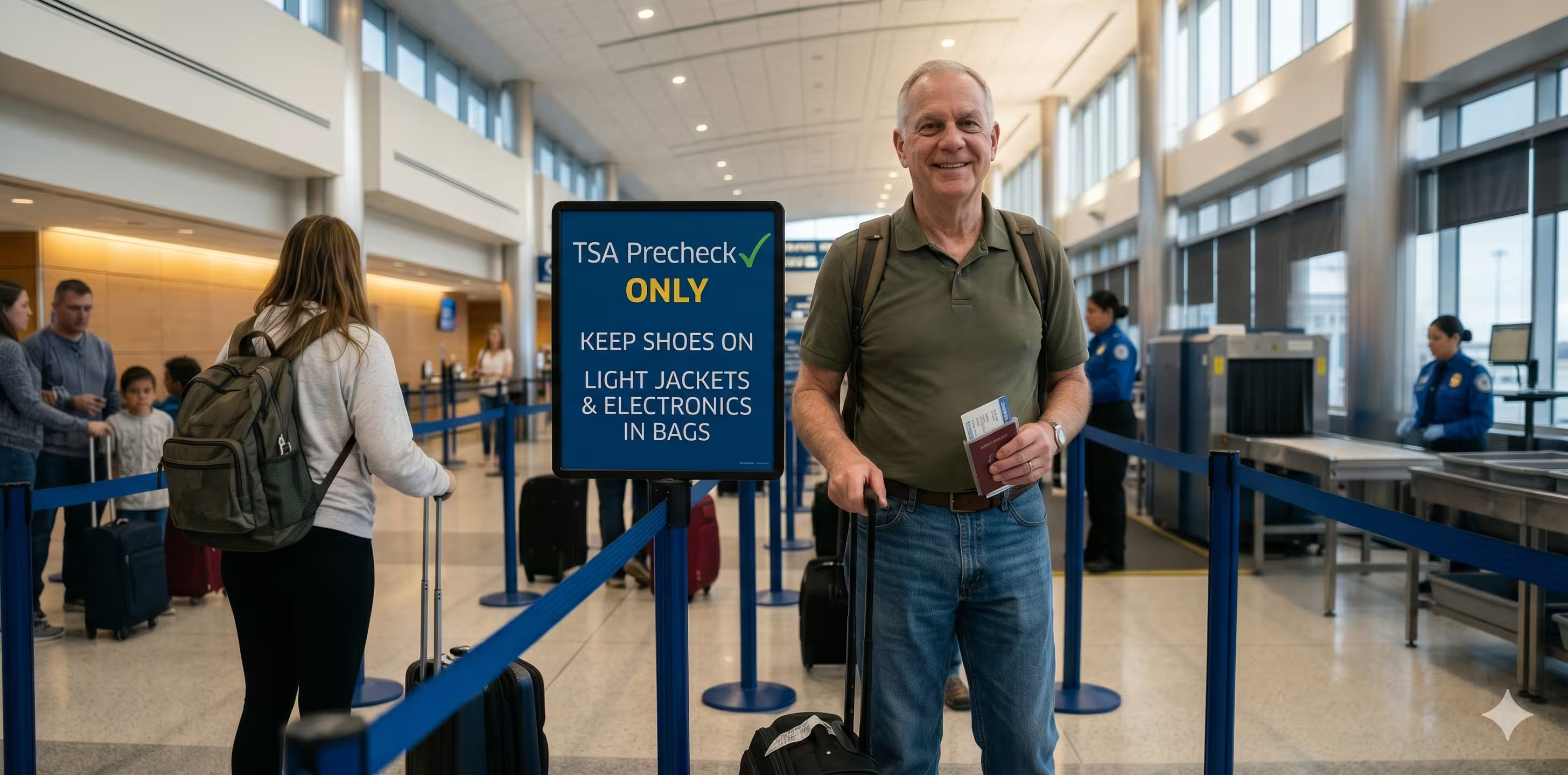



At check-in for their first post-service flight, many veterans type their DoD ID number into the Known Traveler field and wait for the TSA PRE indicator to appear on their boarding pass. It doesn't, and the reason catches most people off guard.
The DoD's free TSA PreCheck program is available only to eligible active-duty service members and qualifying DoD civilians — not to veterans or military retirees. Once you separate or retire, your DoD-linked Known Traveler Number stops working, and you are not eligible to re-enroll through the free DoD program for expedited screening.
This article walks through why the Department of Defense benefit doesn't follow you into retirement, who qualifies for free or reduced-cost enrollment, and how to complete the civilian application — including what documents to bring, how long approval takes, and where a filing-assistance service can help.
TSA PreCheck through the DoD program is an airport security benefit tied to active service status or eligible DoD civilian employment. Veterans and military retirees are explicitly not eligible for the free DoD program. Many people discover this only after a boarding pass comes back without the TSA PRE indicator — a frustrating way to find out that a TSA PreCheck lanes are out of reach.
Here's how the DoD program works while you're serving. Your DoD ID number doubles as your Known Traveler Number. You enter it in the Known Traveler field when booking a flight, TSA verifies your active DoD affiliation in real time, and the PreCheck benefit applies. No application is required and there's no enrollment fee. It's a seamless benefit of active service managed through the TSA PreCheck military program.
What changes at separation for military members is that TSA can no longer verify active DoD affiliation when you book. The system checks your status at booking time, not at the airport gate. Once your service ends, that check fails and you lose your TSA PreCheck benefits. Your old DoD-generated KTN doesn't transfer to veteran or retiree status and cannot be reactivated. Retirees and veterans fall outside the eligibility criteria for the free DoD program entirely — they must enroll through the civilian TSA PreCheck process unless they qualify under a separate law such as the VETS Safe Travel Act.
When you enroll as a civilian, TSA issues you a new KTN: a 9-digit number that's separate from and unrelated to your DoD ID. That new number is what you'll enter in the Known Traveler field for all future reservations.
If you're in the Guard or Reserve, the same principle applies. Free PreCheck applies when you're on qualifying orders, not during personal travel. Once you're off orders, you're in the same position as any other veteran who needs to enroll through the civilian process.
Checking with your airline won't fix this. The issue isn't an airline database problem; it's that the TSA eligibility check no longer returns a match for your DoD ID. The solution is a new civilian enrollment.
Most veterans and military retirees pay the standard civilian enrollment fee of $76.75 to $85, with no general veteran discount available. (Note that different authorized providers set their own fees within this range — there is no single universal fee.) Free enrollment options exist for two specific groups: disabled veterans with qualifying service-connected disabilities under the VETS Safe Travel Act, and immediate family members of fallen service members under the Serve with Honor, Travel with Ease program. Here is what each group can expect.
Most veterans and military retirees: standard civilian fee
The majority of veterans and retirees pay the same $76.75 to $85 enrollment fee as any other U.S. citizen, depending on which of the three authorized providers they choose. There is no general veteran discount on the standard TSA PreCheck fee.
Disabled veterans: VETS Safe Travel Act
Under the VETS Safe Travel Act, signed into law on January 4, 2025, veterans with certain qualifying service-connected disabilities are eligible for free TSA PreCheck enrollment. This is not a blanket benefit for all veterans — eligibility requires a specific qualifying condition: amputation or loss of use of an extremity, paralysis, or permanent blindness. The VA certifies eligibility for individual applicants, and TSA then waives the enrollment fee upon receiving that certification.
TSA is still coordinating with the VA on full program implementation. If you believe you qualify, contact TSA directly for current enrollment procedures before scheduling an appointment. Do not assume the standard enrollment path applies; the fee waiver process involves a separate VA certification step, and timelines may differ from civilian processing.
Gold Star families: Serve with Honor, Travel with Ease
Immediate family members of service members who died in service qualify for free TSA PreCheck enrollment under the Serve with Honor, Travel with Ease program, which launched in July 2025. Qualifying family members include spouses, parents, children, and siblings.
Regardless of which category applies to you, the TSA PreCheck enrollment process through GOV+ starts with an eligibility check that confirms the right path before you submit anything.
Veterans and retirees apply through the same civilian enrollment process as any U.S. citizen. There are four stages, and the total time from submitting your online pre-enrollment form to receiving your KTN is typically 10 to 30 days, with most applicants finishing closer to the lower end.
Step 1: Complete the online pre-enrollment form
The pre-enrollment form takes about five minutes. You'll enter personal information, confirm U.S. citizenship, and provide basic identity details. Complete this step online before your in-person appointment; you'll need a confirmation number when you check in at the enrollment center.
Step 2: Choose an enrollment provider and schedule your appointment
Three providers are authorized to conduct TSA PreCheck enrollment. Choose based on which has a convenient center near you, then schedule your appointment online. Most applicants can get a slot within one to five days.
If you'd rather not manage the pre-enrollment and provider selection yourself, GOV+ TSA PreCheck enrollment handles the online form, schedules your appointment at the nearest center, and prepares your document checklist in one step.
Step 3: Attend your in-person appointment
The appointment takes about 10 minutes. You'll present your government-issued photo ID and proof of U.S. citizenship, and you'll submit fingerprints. No prior preparation is needed for fingerprinting; it happens on the spot.
Step 4: Receive your KTN and add it to your reservations
TSA issues your 9-digit Known Traveler Number by email. Typical processing is 3 to 5 business days after your appointment; the maximum is 30 days. Once you receive it, add it to any existing airline reservations and to your frequent flyer profiles. The TSA PRE indicator will appear on your boarding pass from that point forward.
Two categories of documents are required at your in-person enrollment appointment: proof of identity and proof of U.S. citizenship. The simplest approach is to bring a valid U.S. passport book or passport card, which satisfies both requirements in a single document.
Proof of identity (present one of the following):
Proof of U.S. citizenship (present one of the following, if not using a passport as your identity document):
Fingerprints are collected at the appointment. No preparation is needed beforehand.
GOV+ includes a personalized document checklist with every TSA PreCheck enrollment appointment so you arrive prepared on your first visit.
After completing your in-person enrollment appointment, TSA typically issues a KTN within 3 to 5 business days. The full process from submitting the online pre-enrollment form to receiving your KTN can take up to 30 days, though most applicants receive approval well before that.
Once you receive your KTN, add it to any existing airline reservations and to your frequent flyer profiles. The TSA PRE indicator will appear on your boarding pass once the KTN is linked and your airline participates in the program.
Whether you're renewing your TSA PreCheck or a veteran applying for the first time, GOV+ makes the process easy.
And once you're approved, GOV+ keeps your membership from slipping through the cracks — with automatic renewal reminders so your PreCheck never expires without warning.
Ready to apply for TSA PreCheck? Get started here.
No. The free DoD PreCheck program is available only to eligible active-duty service members of US military and qualifying DoD civilians. Military retirees and veterans are not eligible for the free DoD program. TSA verifies active DoD affiliation at flight booking, so the old KTN stops working once you separate or retire. Veterans and retirees must enroll through the civilian process to receive a new 9-digit civilian KTN. Your old DoD ID cannot be reactivated as a KTN under any circumstance.
Most veterans do not receive a discount. The standard civilian enrollment fee — which varies between $76.75 and $85 depending on which provider you choose — applies to the majority of veterans and retirees. Two exceptions exist: disabled veterans with qualifying service-connected disabilities may enroll for free under the VETS Safe Travel Act (subject to VA certification and TSA processing), and Gold Star family members qualify for free enrollment under the Serve with Honor, Travel with Ease program (launched July 2025).
Under the VETS Safe Travel Act (signed January 4, 2025), veterans with certain qualifying service-connected disabilities are eligible for free TSA PreCheck enrollment. This benefit is not automatic or universal — it applies to veterans with specific conditions: amputation or loss of use of an extremity, paralysis, or permanent blindness. The VA certifies individual eligibility and TSA waives the enrollment fee upon receiving that certification. TSA is still coordinating with the VA on full implementation. Contact TSA directly for current procedures before applying.
Yes. Civilian-enrolled TSA PreCheck memberships are valid for 5 years. Renewal fees range from $58.75 to $70 depending on the provider and whether you renew online or in person. GOV+ sends automatic renewal reminders before your membership expires so you don't lose access between trips without realizing it.
Yes. Once TSA issues your Known Traveler Number (KTN), log into your existing airline reservations and add it to the Known Traveler field. Also add it to your frequent flyer profiles for automatic application to future bookings. The TSA PRE indicator will appear on your boarding pass once the KTN is linked and your airline participates in the program.


1,500,000+








© 2026 EIN Plus LLC DBA GovPlus. All rights reserved. GovPlus® is a registered trademark of EIN Plus LLC.
GovPlus® is a private online software technology company not affiliated nor endorsed by any Government or State agency. GovPlus® is authorized by the U.S. Department of State, through its subsidiary Premier Passports LLC as a registered passport courier, by the Internal Revenue Service (IRS) as an authorized e-file provider, by the Financial Crimes Enforcement Network (FinCEN) as a Beneficial Ownership Information (BOI) provider. We do not charge for any forms; however, we charge for the use of our software to assist you in completing forms. GovPlus® is not a federal or state agency, financial institution, accounting firm, or law firm, and we do not provide legal or financial advice. GovPlus® does not issue any government documents. You can apply directly for government services at their official websites at no cost beyond government fees.
Terms and conditions, features, support, pricing, and service options subject to change without notice.


.avif)