Do Social Security Cards Expire?




Social Security cards do not expire. Once the Social Security Administration (SSA) issues you a number, it stays with you for the rest of your life, and the card that carries it has no expiration date printed anywhere on it.
That said, plenty of people still end up needing a new card. Maybe yours was lost in a move, damaged in the wash, or you legally changed your name and your card no longer matches your ID. None of that means the card "expired." It means the physical document needs to be replaced, which is a different problem with its own solution.
Here is what actually happens when a card is lost or damaged, who can replace one online, and what the process looks like from start to finish.
What Is a Social Security Card?
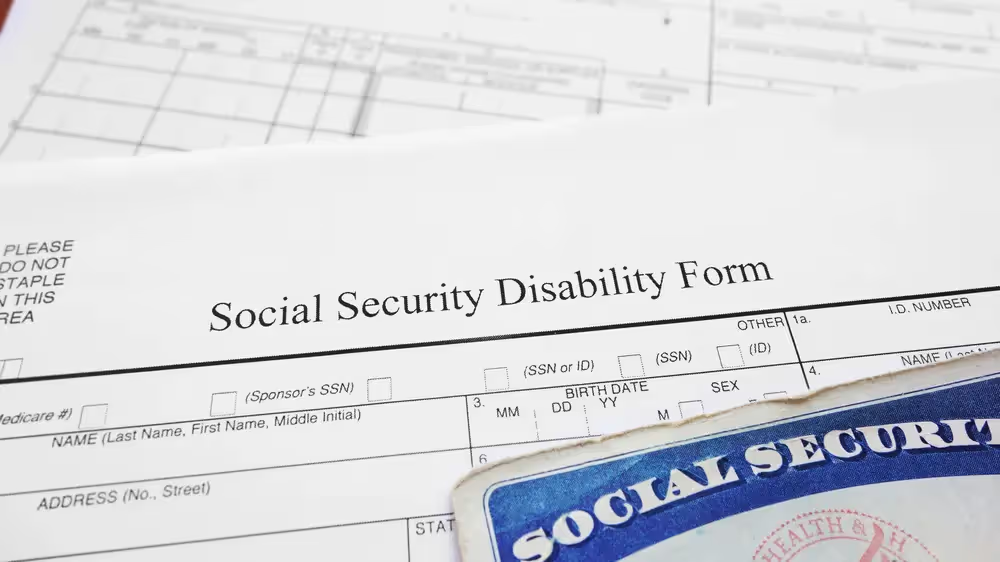
A Social Security card is a small paper document issued by the SSA. It generally shows two pieces of information: your full legal name and your nine-digit Social Security number.
The number and the card are related but not the same thing. The number is a permanent identifier tied to your earnings record, tax filings, and eligibility for benefits like retirement and disability. The card is simply the physical proof of that number. If the card disappears, the number does not disappear with it.
Most U.S. citizens are issued an SSN at birth, usually when a parent applies through the state's birth registration process. Lawful permanent residents and certain individuals authorized to work in the U.S. by DHS can also be issued an SSN, though the card may note if it is valid only with DHS work authorization.
Once the SSA assigns a number, that number does not change, even if the person's name or address changes later.
Do Social Security Cards Expire?
No. Social Security cards do not expire, and there is no expiration date field on the card itself. Compare that to a driver's license, which typically needs renewal every four to eight years depending on the state, or a U.S. passport, which is valid for ten years for adults. A Social Security card has no such cycle.
The number works the same way. Once the SSA assigns it, it is yours permanently. It does not need to be renewed, and the SSA does not deactivate it after any period of inactivity. This is true whether you were born in the U.S., naturalized as a citizen, or issued a number as a permanent resident or authorized worker.
When Do You Need a Replacement Card?
Even though the card never expires, the SSA does allow you to request a replacement in specific situations:
- The card is lost. This is the most common reason people request a new one.
- The card is stolen. If this happens, consider monitoring your credit in addition to replacing the card.
- The card is damaged or unreadable. Water damage, tearing, or fading over the years can make the card hard to use for verification purposes.
- Your legal name changes. Marriage, divorce, or a court-ordered name change means your card should reflect your current legal name.
- Your SSA record needs a correction. If your card shows a misspelled name or other error in the SSA's records, you can request a corrected card once the underlying record is fixed. This is distinct from a legal name change, which requires its own documentation, such as a marriage certificate or court order.
The SSA also limits how often a card can be replaced: generally up to three replacements per year and ten over a lifetime. Legal name and immigration status changes don't count against that limit. If you need a replacement beyond the limit for another reason, you'll need to provide the SSA with a valid exception reason, such as a natural disaster or an emergency need for the card.
How to Replace a Social Security Card
Replacing a Social Security card is free. There is no fee through the SSA, and no legitimate service should ask you to pay the government for the card itself.
- Online. To use the SSA's online replacement service, you generally need to meet all of the following: you're a U.S. citizen, age 18 or older, have a U.S. mailing address, hold a qualifying state-issued driver's license or ID card, and aren't requesting a name change or any other update to your record. You'll also need a "my Social Security" account at ssa.gov to access the service. The SSA's online tool asks a short series of questions to confirm you meet these conditions before letting you complete the application.
- By mail or in person. If you don't meet the online conditions, or if you're changing your name or updating other information, you'll need to complete Form SS-5 (Application for a Social Security Card) and bring or mail it, along with supporting documents, to a local Social Security office or Card Center.
The card is mailed after processing rather than issued the same day. Once an application is approved, the new card typically arrives within one to two weeks, though processing times can vary. - Use GOV+ for a simpler path Not sure which option applies to you, or find the SSA's process confusing? GOV+ offers a straightforward alternative regardless of whether you qualify for online filing.
Fill out one simple form and GOV+ will guide you through the entire process — no government portals to navigate, no uncertainty about whether you've done it right.
What Documents Do You Need?
Document requirements depend on your situation, but one rule applies across the board: the SSA requires original documents or copies certified by the agency that issued them. Photocopies and notarized copies are not accepted, and documents that have expired generally aren't either.
What you need to provide depends on the purpose:
- Identity. A current driver's license, state-issued ID card, or U.S. passport is typically enough to establish identity.
- Citizenship (if you're a U.S. citizen and it's not already on file with the SSA). A U.S. passport, a Certificate of Naturalization, a Certificate of Citizenship, or a U.S. birth certificate can serve this purpose.
- Lawful immigration status (if you're not a U.S. citizen). SSA generally requires a current document from DHS, such as a Permanent Resident Card (Form I-551), Employment Authorization Document (Form I-766), or Arrival/Departure Record (Form I-94), depending on your status.
- Legal name change. A marriage certificate, divorce decree, or court order showing the name change, in addition to the identity and citizenship or immigration documents above.
If you don't have a driver's license, state ID, or passport, the SSA may accept a secondary identity document, such as a U.S. military ID, a school ID, or a health insurance card. These are accepted only as a backup when a primary document isn't available, and they still need to be current and show your name along with identifying information such as your photo or date of birth.
How GOV+ fits the process
GOV+ is designed to make sure Social Security card applicants arrive at their SSA field office with a complete, accurate Form SS-5 package — so there are no missing documents or errors that require a second trip.
If you need to replace your Social Security card, here's how GOV+ can help:
- We prepare your complete Form SS-5 application package so you don't have to navigate the process on your own.
- Our expert reviewers check your application for errors and missing information before you go to your field office appointment.
- GOV+ walks you through exactly which identity, age, and citizenship documents to bring for your specific situation so nothing is missing when you arrive.
- Identity theft protection with up to $1M coverage.
Ready to get started? Replace your Social Security card with GOV+.
Frequently Asked Questions
Do Social Security numbers expire?
No. Once the SSA assigns a Social Security number, it belongs to that person for life. It does not expire and is not reissued to someone else.
Can I replace my Social Security card online?
You can if you're a U.S. citizen, age 18 or older, have a U.S. mailing address, hold a qualifying state-issued driver's license or ID card, and aren't requesting a name change or other update to your record. If you don't meet all of these conditions, you can still apply by mail or at a local Social Security office or Card Center.
How much does it cost to replace a Social Security card?
Nothing. The SSA issues replacement cards for free. If you use a private filing-assistance service like GOV+ to help prepare your application, that service charges its own fee, but the SSA itself never charges for the card.
What should I do if my card is lost or stolen?
Request a replacement through the SSA as soon as possible. As general identity-protection guidance rather than an SSA requirement, it's also worth placing a fraud alert with the major credit bureaus and monitoring your credit for signs of misuse.
Do I need a new card if I change my name?
Yes. A legal name change, such as through marriage, divorce, or a court order, means you should update your Social Security card to match your current legal name. This requires supporting documents, such as a marriage certificate or court order, and in many cases a visit to a local office. The new card will show your new name, but your Social Security number stays the same.
Sources:
- Social Security Administration. Social Security Number & Card. ssa.gov/number-card
- Social Security Administration. Replace Your Social Security Card. ssa.gov/number-card/replace-card
- Social Security Administration. How Do I Apply for a Replacement Social Security Number Card Online? ssa.gov/faqs
- USA.gov. How to Get, Replace, or Correct a Social Security Card. usa.gov/social-security-card
- U.S. Department of Homeland Security, Study in the States. Obtaining a Social Security Number. studyinthestates.dhs.gov