TSA PreCheck for Veterans and Active-Duty Military (2026 Guide)
.avif)



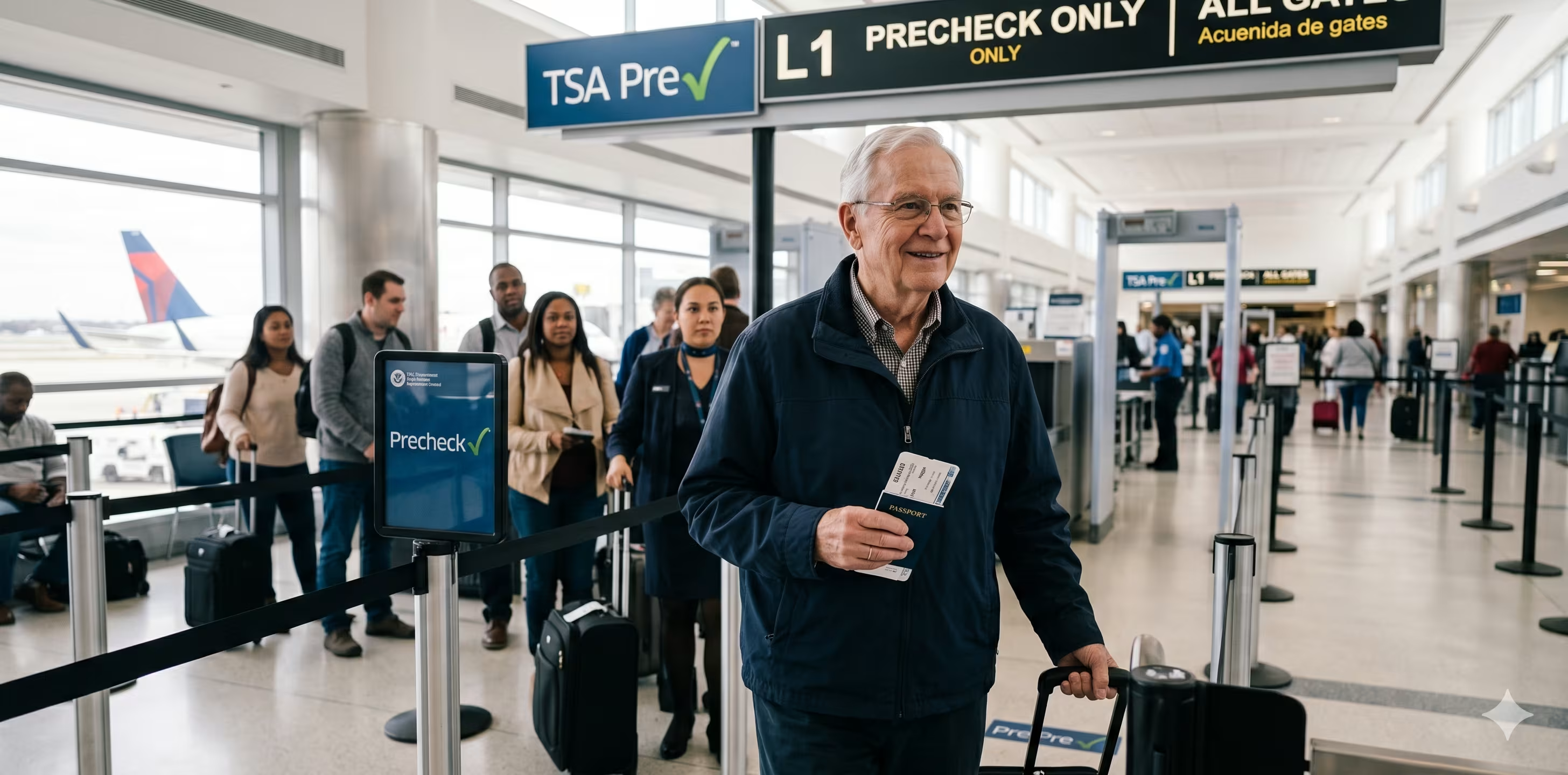
If you're active duty, you already have TSA PreCheck. You don't need to apply for anything. Just use your Department of Defense (DoD) ID number as your Known Traveler Number (KTN) when you book a flight, and the TSA PRE indicator will show up on your boarding pass.
If you're a veteran or military retiree, the situation is different. Your TSA PreCheck benefits don't carry over when you leave the DoD. Most veterans have to apply through the standard civilian process and pay the enrollment fee. Two exceptions apply: certain disabled veterans qualify for a fee waiver under the VETS Safe Travel Act, and Gold Star families receive free enrollment.
Who Gets Free TSA PreCheck in the Military
Your eligibility depends entirely on your current status, not your service history.
The free benefit is tied to active DoD status, not prior service.
Active-Duty Military, Guard, and Reserve: No Application Needed
No enrollment center visit needed. Your 10-digit DoD ID number on the back of your Common Access Card (CAC) is your KTN.
How to Add Your DoD ID as a KTN
- Find your DoD ID number. It's the 10-digit number on the back of your CAC, not your Social Security number.
- Enter it in the KTN field when you book a flight. Do this on the airline's website, app, or over the phone. Save it to your frequent flyer profile so it fills in automatically.
- Check your boarding pass. You should see "TSA PRE" or "TSAPRECHK." If it's missing, check that your name matches your DoD records exactly.
This works for official and personal travel, and you don't need to be in uniform. DoD civilian employees opt in first through the milConnect portal.
Veterans and Military Retirees: What Happens After You Leave
Your TSA PreCheck access ends the day your DoD status ends. TSA's system checks your current enrollment status, not your service record, so a retired DoD ID number typically won't generate the PreCheck indicator on your boarding pass.
If you had PreCheck before and it lapsed, the TSA PreCheck renewal process is 100% online — no in-person appointment, no mailing anything. GOV+ handles the scheduling either way.
How Veterans Apply for TSA PreCheck
Before you start, review the full TSA PreCheck eligibility requirements to confirm you qualify. Then follow these steps:
- Start your application online. The form takes about five minutes. You'll enter your personal information, answer a few background questions, and schedule an in-person appointment.
- GOV+ books your enrollment center appointment for you. GOV+ surfaces the closest open slot so you're not clicking through multiple provider websites.
- Attend your appointment. Bring your ID and any required documents. The appointment takes about 10 minutes. You'll be fingerprinted and pay the government fee on-site.
- Receive your KTN by email. Most applicants are approved within 3 to 5 days. Plan for up to 30 days from start to finish, and don't wait until the week before a trip.
You don't need your DD-214 or any military documentation. Veterans apply as civilians.
Whether you're applying for the first time or renewing, GOV+ makes the process easy:
- Simple online form with no paper forms and no government websites to navigate
- Appointment scheduling so we set up your in-person visit for you
- Real-time tracking so you can monitor your application status at every step
- 24/7 expert support to get answers fast without waiting on hold
With a GOV+ subscription, your PreCheck is automatically renewed before it expires — for free, you just pay the government fee. No expiration dates to track, no scrambling to reapply.
Ready to apply? Get started here.
Free TSA PreCheck for Certain Disabled Veterans
Congress passed the Veterans Expedited TSA Screening (VETS) Safe Travel Act in December 2024, and President Biden signed it into law on January 4, 2025. It extends free TSA PreCheck to veterans with specific service-connected disabilities: amputation or loss of use of an extremity, paralysis, or permanent blindness. The VA certifies eligibility, TSA waives the enrollment fee, and a standard background check still applies.
TSA and the VA are still rolling out this program, so documentation steps may evolve. Check tsa.gov/precheck/military for current instructions.
For checkpoint assistance, TSA Cares helps disabled veterans traveling with prosthetics or mobility devices. Call (855) 787-2227 at least 72 hours before departure.
Other Military Community Benefits (2025 Updates)
In July 2025, TSA launched the "Serve with Honor, Travel with Ease" initiative with new benefits for the broader military community.
Gold Star Families
Spouses, parents, children, and siblings of service members who died while serving in the United States armed forces, including those who died from a service-connected injury or illness after separation, can enroll in TSA PreCheck at no cost. Free enrollment is currently available through CLEAR and IDEMIA.
To prove eligibility, you need either a TAPS verification letter from the Tragedy Assistance Program for Survivors or a TSA acknowledgment form. Contact TAPS to request a verification letter, or call the TSA Contact Center at (866) 289-9673 to request an acknowledgment form.
Military Spouses
Military spouses aren't covered by their partner's DoD ID and need their own KTN. The current benefit is a $25 discount on enrollment or renewal with a valid Uniformed Services Identification (USID) card. For families enrolling multiple members, the guide to TSA PreCheck for families covers the full picture. Premium travel credit cards can also reimburse the remaining fee.
Common Mistakes Veterans Make with TSA PreCheck
Using a DoD ID number after separation. Once you leave the DoD, that number no longer connects to an active PreCheck enrollment. Your boarding pass will show standard screening. You need a civilian KTN.
Name mismatches with your airline reservation. One of the most frequent reasons the TSA PRE indicator doesn't appear: Your name needs to match your TSA records exactly, including middle names, suffixes, or name changes since you last enrolled.
Waiting until right before a trip. Most approvals come through in 3 to 5 days, but appointment availability can push the timeline. Give yourself at least 30 days between your application and the trip.
GOV+ expert review catches errors before they cause problems and books your appointment.
You've served. If you're active duty, it starts with your DoD ID in the KTN field. If you're a veteran, it starts with a five-minute application. Don't wait until the week before your flight. Appointment slots fill up.
Start your TSA PreCheck application with GOV+.
Frequently Asked Questions
Do veterans get free TSA PreCheck?
Most veterans do not. The free benefit is tied to current DoD status. Veterans who have separated or retired must apply through the standard civilian process and pay the enrollment fee, unless they qualify under the VETS Safe Travel Act.
If you're ready to enroll, GOV+ handles the online application and books your enrollment center appointment for you, so you're not navigating multiple provider websites on your own.
Does TSA PreCheck carry over after leaving the military?
No. Benefits end when your DoD status ends. Enroll before your final day so you don't have a gap in coverage.
When you're ready to enroll as a civilian, GOV+ starts with a simple online form and books your in-person appointment for you, the whole process takes about five minutes to get started.
Can I use my DoD ID number for TSA PreCheck after retirement?
In most cases, no. TSA's system checks current DoD enrollment status, not veteran status. A retired ID typically won't generate the TSA PRE indicator. Enroll as a civilian to get a KTN that works reliably.
To get a civilian KTN, GOV+ books your enrollment appointment and walks you through the process step by step, so you arrive at your enrollment center with everything in order.
How do military spouses get TSA PreCheck?
Military spouses apply as civilians and receive a $25 discount with a valid USID card. Premium travel credit cards can also reimburse the fee.
What is the VETS Safe Travel Act?
It's a law signed in January 2025 that gives certain disabled veterans free TSA PreCheck enrollment. Qualifying disabilities include amputation or loss of limb use, paralysis, or permanent blindness. The VA certifies eligibility and TSA waives the fee. Check tsa.gov for the current enrollment process.
For standard TSA PreCheck enrollment, GOV+ can help you get started with a simple online form and handles booking your appointment for you.
References
- Transportation Security Administration. "TSA PreCheck for Uniformed Service Members." https://www.tsa.gov/precheck/military
- Transportation Security Administration. "Announcing New TSA PreCheck 'Serve with Honor, Travel with Ease' Benefits for the Military and Uniformed Service Community." July 2, 2025. https://www.tsa.gov/news/press/releases/2025/07/02/announcing-new-tsa-precheckr-serve-honor-travel-ease-benefits-for
- Transportation Security Administration. "Gold Star and Military Survivor Family TSA PreCheck Enrollment." https://www.tsa.gov/precheck/military/survivor-families
- Transportation Security Administration. "TSA Cares Passenger Support." https://www.tsa.gov/travel/tsa-cares/passenger-support
- Transportation Security Administration. "Do my existing TSA PreCheck benefits continue after leaving DOD?" https://www.tsa.gov/travel/frequently-asked-questions/do-my-existing-tsa-precheckr-membership-benefits-continue-after
- Senator Todd Young. "Young, Colleagues: VETS Safe Travel Act Signed Into Law." January 8, 2025. https://www.young.senate.gov/newsroom/press-releases/young-colleagues-vets-safe-travel-act-signed-into-law/
- Congress.gov. "H.R.7365, VETS Safe Travel Act, 118th Congress (2023-2024)." https://www.congress.gov/bill/118th-congress/house-bill/7365