How to take a passport photo at home
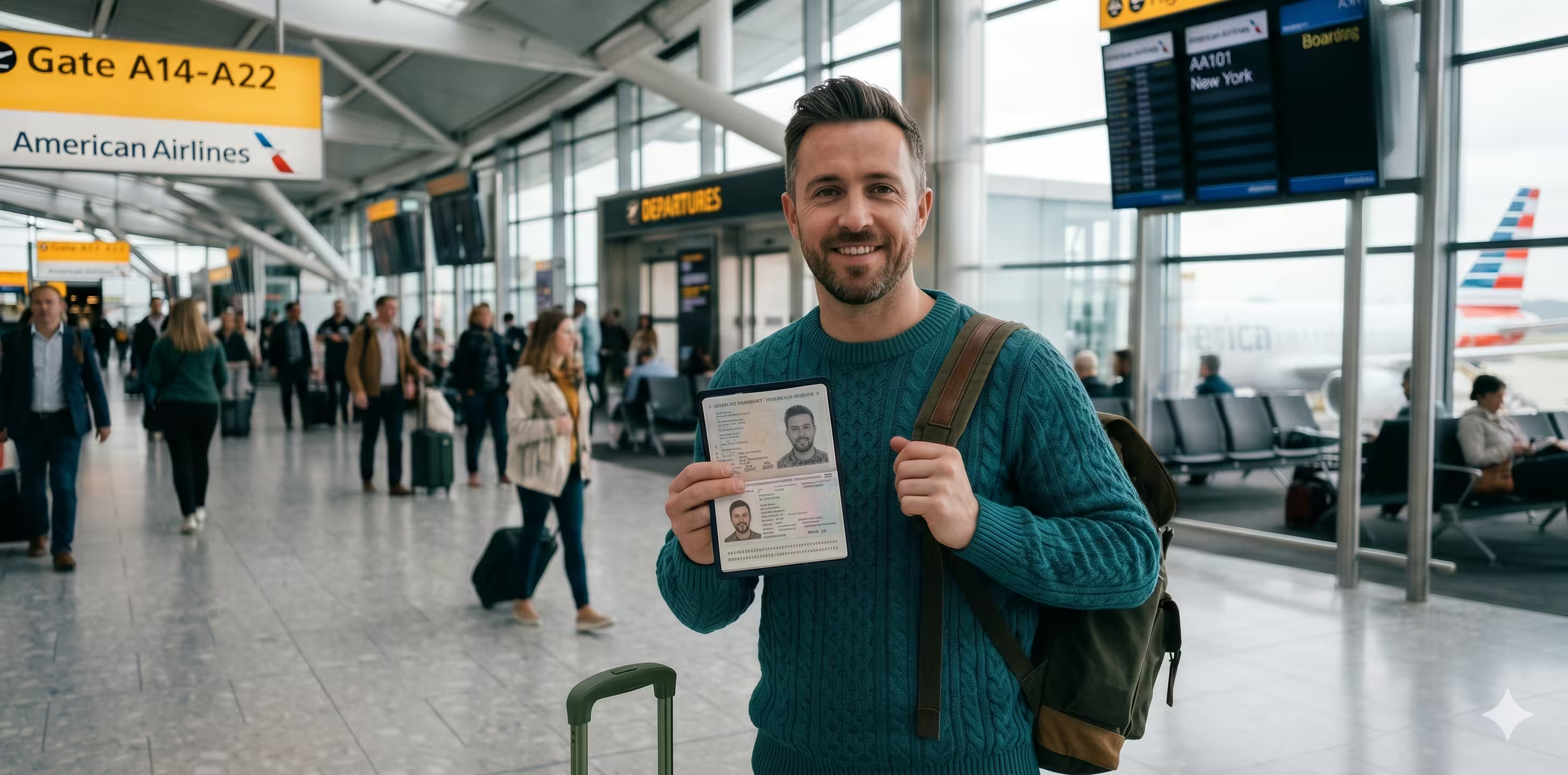
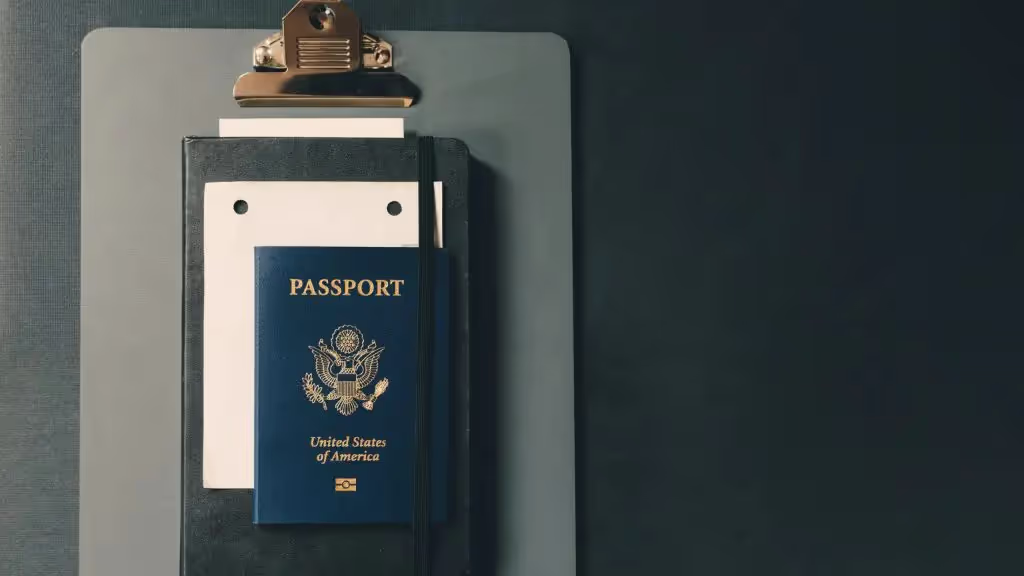
Image credit: Global Residence Index


Yes, you can take a passport photo at home — and it's easier than most people think. To do it successfully, your photo must meet the U.S. State Department's requirements: taken within the last six months, in color, on a plain white or off-white background, with even lighting, no shadows, and your face fully visible without glasses, hats, or filters. The photo must measure 2×2 inches when printed, on matte or glossy photo paper, and your head should take up between 1 and 1.4 inches of the frame.
This guide covers everything you need to know to take a compliant US passport photo at home — from how to pose and what to wear, to tips for photographing children and infants, and how to print and submit your photo with your passport application.
The official requirements for a passport photo
The most important part about taking your own passport photo is meeting the U.S. State Department's photo requirements. Photos that don't follow the proper template are the number one cause of application delays.
Your passport photo must meet all of the following requirements:
- Color — photos must be in color, not black-and-white
- Recency — taken within the last six months
- Background — plain white or off-white, with no shadows, patterns, or objects
- Face — clear image of your full face, looking directly at the camera
- Expression — neutral, with eyes fully open and mouth closed
- Lighting — uniform, with no cast shadows on your face or background
- Head size — between 1 and 1 3/8 inches (25–35 mm) from chin to crown
- Print size — 2×2 inches (51×51 mm)
- No filters — clear and unaltered, with no pixelation or digital modifications
- No selfies — must be taken by another person or with a self-timer
Photos that don't meet these requirements will be rejected and your application put on hold until a new photo is submitted.
How to take your passport photo at home: Step by step
Step 1: Prep your space
- Set up in front of a plain white or off-white wall, or hang a white sheet as your background.
- Position yourself near a window to take advantage of natural light, or use soft lamps on both sides of your face to ensure good lighting. Aim for even, shadow-free illumination.
- Place your phone or camera at eye level — never shoot from above or below.
Step 2: Pose correctly
- Face the camera directly with a neutral facial expression — eyes fully open, mouth closed. Your eyes should not be covered by your hair
- Do not wear eyeglasses (unless medically documented), hats or head coverings (except for religious or medical reasons, which require a signed statement with your application), uniforms, or masks that cover any part of your face.
- If you wear a head covering for religious reasons, that covering should be in one color, and shouldn’t have patterns or small holes
- Wear everyday clothing; jewelry is permitted as long as it doesn't obscure any part of your face.
Step 3: Shoot and edit
- Have a helper take the photo rather than taking a selfie; a self-timer is acceptable if no one is available.
- Do not apply any filters, adjustments, or digital alterations — the photo must be submitted exactly as taken. This includes AI-powered editing tools, beauty filters, photo-enhancing apps, and any computer software that alters your appearance.
- Once you have a clean shot, crop it to the correct dimensions using the State Department's free cropping tool. Your final image should be 2×2 inches (51×51 mm) with your head between 1 and 1 3/8 inches (25–35 mm) from chin to crown.
Step 4: Print or submit digitally
- Printing: If you’re submitting your application in person, print your photo on matte or glossy photo paper at 300–600 DPI. The photo must be undamaged, free of printer marks, and not copied or digitally scanned.
- Online renewal: A digital passport photo should be in JPEG or HEIF format, sized between 600×600 and 1200×1200 pixels, under 10 MB.
Taking kids’ passport photos at home
Passport photo rules apply to children of all ages, including newborns. Here's what to keep in mind for each age group.
All children
- Only one person may appear in the photo — no parents, hands, or body parts visible in the frame.
- Hair should be pulled back and away from the face.
- Children should not be touching their face.
Infants and newborns
- Infants are not required to have their eyes open, but their face must be fully visible and facing the camera.
- It’s easier to take a baby passport photo if you lay the infant on a plain white sheet or place them in a car seat covered with a white sheet to achieve the required background.
- No parent or caregiver may be visible in the shot, including hands supporting the head.
Toddlers and young children
- A neutral expression is required — the same rules apply as for adults.
- Use a favorite toy or sound to get their attention and keep them facing forward.
- Take multiple shots and select the one that best meets requirements.
What tools and apps you can use to take and edit your passport photo
You can use any device that captures photos to take your passport picture, including a digital camera, a smartphone, or a tablet, just so long as it can take high-resolution images. For this reason, web cameras or non-smartphone cameras are not recommended.
When it comes to editing, here are the options worth exploring:
Recommended: State Department cropping tool The State Department's free photo tool is the safest option for cropping and sizing your photo to meet requirements. It's free, requires no account, and is designed specifically to produce a compliant 2×2 inch passport photo.
Phone camera apps If you use a third-party app to crop or format the photo, verify that it does not automatically apply AI enhancements, beauty filters, or background replacements — many do by default. Always check and disable these features before shooting or exporting.
What to avoid Do not use generative AI tools, AI photo editors, or any app that alters your appearance, smooths skin, adjusts lighting on your face, or replaces the background. These changes — even subtle ones — can result in rejection.
Print shops as a backup If you're unsure about printing at home, a local print shop (CVS, Walgreens, FedEx, etc.) or a photo service shop can print a compliant photo from your digital file at the correct size and paper specification. Bring your cropped image file and confirm they print at 300–600 DPI on matte or glossy photo paper.
How to send in your passport photo
Once your photo is ready, you have two submission options depending on whether you're applying in person or renewing online.
Maili in your application (Form DS-11). Attach one printed photo to your completed passport application (Form DS-11) and mail it to the appropriate processing center. Do not staple or paper-clip the photo to your application — attach it as directed on the form.
Renew online. If you qualify for online passport renewal, upload your photo directly through the State Department's photo upload tool. Your digital file must be in JPEG or HEIF format, between 600×600 and 1200×1200 pixels, and under 10 MB.
Want to apply for a passport with less hassle?
Fill out one easy online form, and we’ll help make sure your application is complete and ready to submit.
GOV+ makes passport renewal easy:
- Simple online form — skip the paperwork and avoid navigating government websites on your own
- Document guidance — know exactly what you need to help avoid delays and mistakes
- Photo support — reduce the risk of common photo issues that can hold up your application
- 24/7 expert support — get help whenever you need it
GOV+ is also authorized by the U.S. Department of State to process expedited passport applications. If your travel date is coming up, we can help expedite the submission of corrected applications.
Ready to submit? Apply for a new passport or renew your passport.
FAQ
What are the exact size and quality requirements?
Printed photos must be 2x2 inches (51x51 mm) on matte or glossy photo paper at 300-600 DPI, with head size 1-1⅜ inches (25-35 mm) from chin to crown. Digital versions for online renewal need 600x600 to 1200x1200 pixels in JPEG/HEIF under 10 MB.
Can I take a selfie for my passport?
Selfies are strongly discouraged; have someone else shoot for a straight-on view at eye level with even natural lighting and plain white/off-white background for good image quality.
How do I photograph babies or infants?
Infants can be photographed for a passport photo at home by laying them flat on a plain white sheet or placing them in a car seat covered with a white sheet to achieve the required plain white or off-white background. The baby's face must be fully visible and facing directly toward the camera, but infants are not required to have their eyes open.
No parent, caregiver, or any other person may appear in the photo — this includes hands supporting the baby's head or body. If you need to support the infant, position your hands outside the frame or use a rolled blanket to prop their head, then remove any visible support before taking the shot.
All standard passport photo requirements still apply: no shadows on the face or background, uniform lighting, and the infant's head must measure between 1 and 1⅜ inches (25–35 mm) from chin to crown in the final 2×2 inch (51×51 mm) print.
How can I edit my passport photo?
Editing your passport photo is strictly limited. The State Department requires that passport photos be submitted unaltered — exactly as taken. This means no filters, no AI enhancements, no beauty or skin-smoothing tools, and no background replacement software.
The only editing permitted is cropping and sizing. To crop your passport photo online correctly, use the State Department's free photo cropping tool, which sizes your photo to the required 2×2 inches (51×51 mm) with your head between 1 and 1⅜ inches (25–35 mm) from chin to crown.
If your photo doesn't meet requirements after cropping, the correct fix is to retake it — not to edit it.
Is religious attire allowed in a passport photo?
Yes, religious head coverings are permitted in U.S. passport photos, but only if worn daily as part of your religious practice. The covering must not cast shadows on your face or obscure any part of your facial features — your full face must remain clearly visible from the bottom of your chin to the top of your forehead.
The same exception applies to head coverings worn for medical purposes, such as a hat or scarf worn during chemotherapy. A signed statement explaining the medical necessity must accompany your application in that case as well.
All other hats, head coverings, and accessories that are not worn for religious or medical reasons are prohibited.
Sources:
- U.S. Department of State. Passport Photos. https://travel.state.gov/content/travel/en/passports/how-apply/photos.html
- U.S. Department of State. Do You Have a Picture Perfect Passport? https://travel.state.gov/content/travel/en/passports/how-apply/photos.html
- U.S. Department of State. Uploading a Digital Photo https://travel.state.gov/content/travel/en/passports/how-apply/online-renewal-photo.html